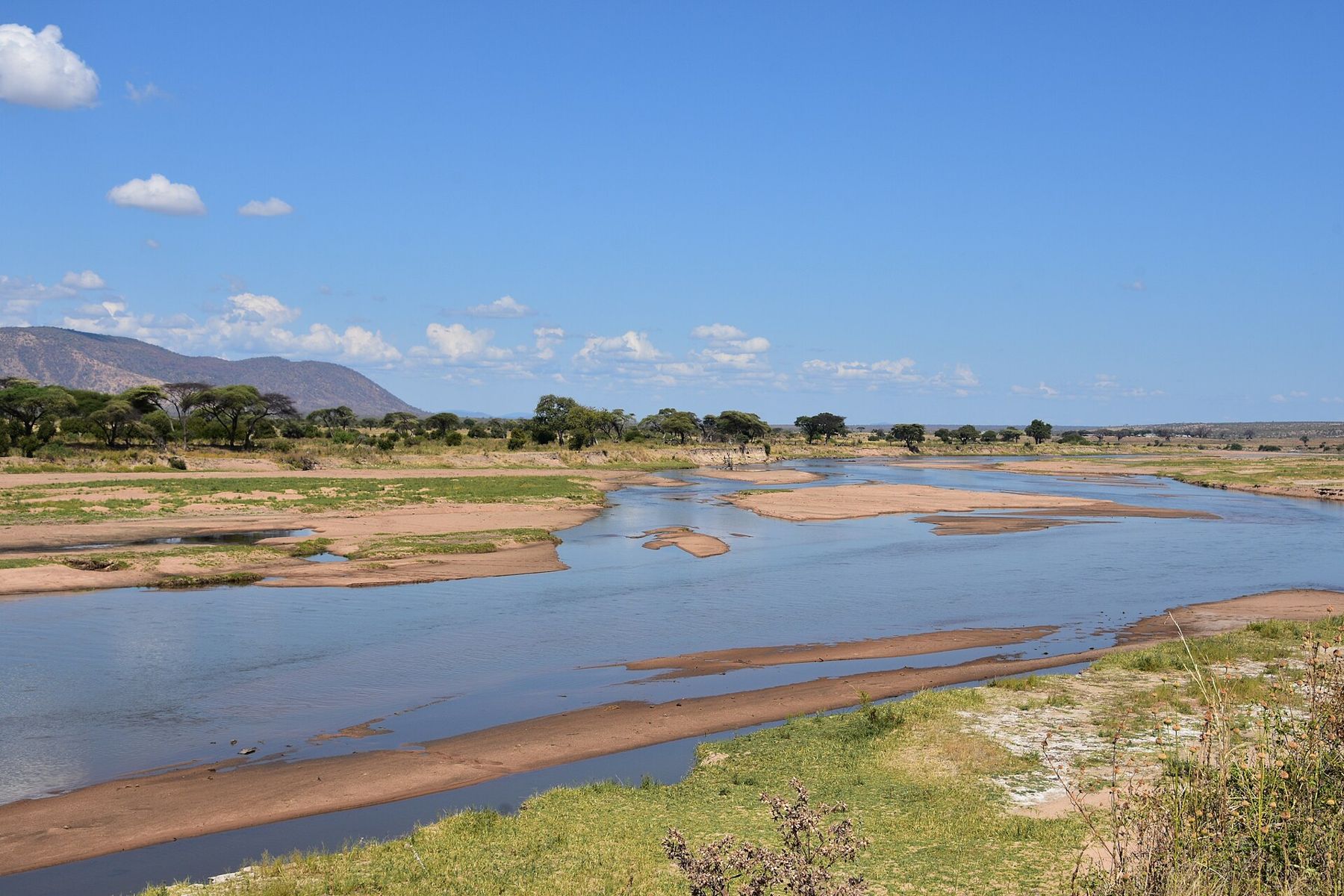
The Great Ruaha River rises in the Southern Highlands, crosses the Usangu plains and runs along the south-eastern side of Ruaha National Park before continuing east to join the Rufiji river system. Inside the park it is the single most important source of water in the dry season, and much of what you see on a game drive happens within reach of its banks.
A river of pools
In the rains the river runs wide and brown. As the dry season goes on, the flow drops and the channel breaks into a string of pools linked by sandbars and shallow runs. Since the 1990s the river has often stopped flowing altogether inside the park for part of the year, a change traced to falling outflow from the Ihefu swamp upstream.
The pools that remain become crowded. Hippos pack together in the deeper water, and crocodiles gather wherever fish are trapped. The shrinking water can make the river feel busier in October than in March, even though there is far less of it.
Animals coming down to drink
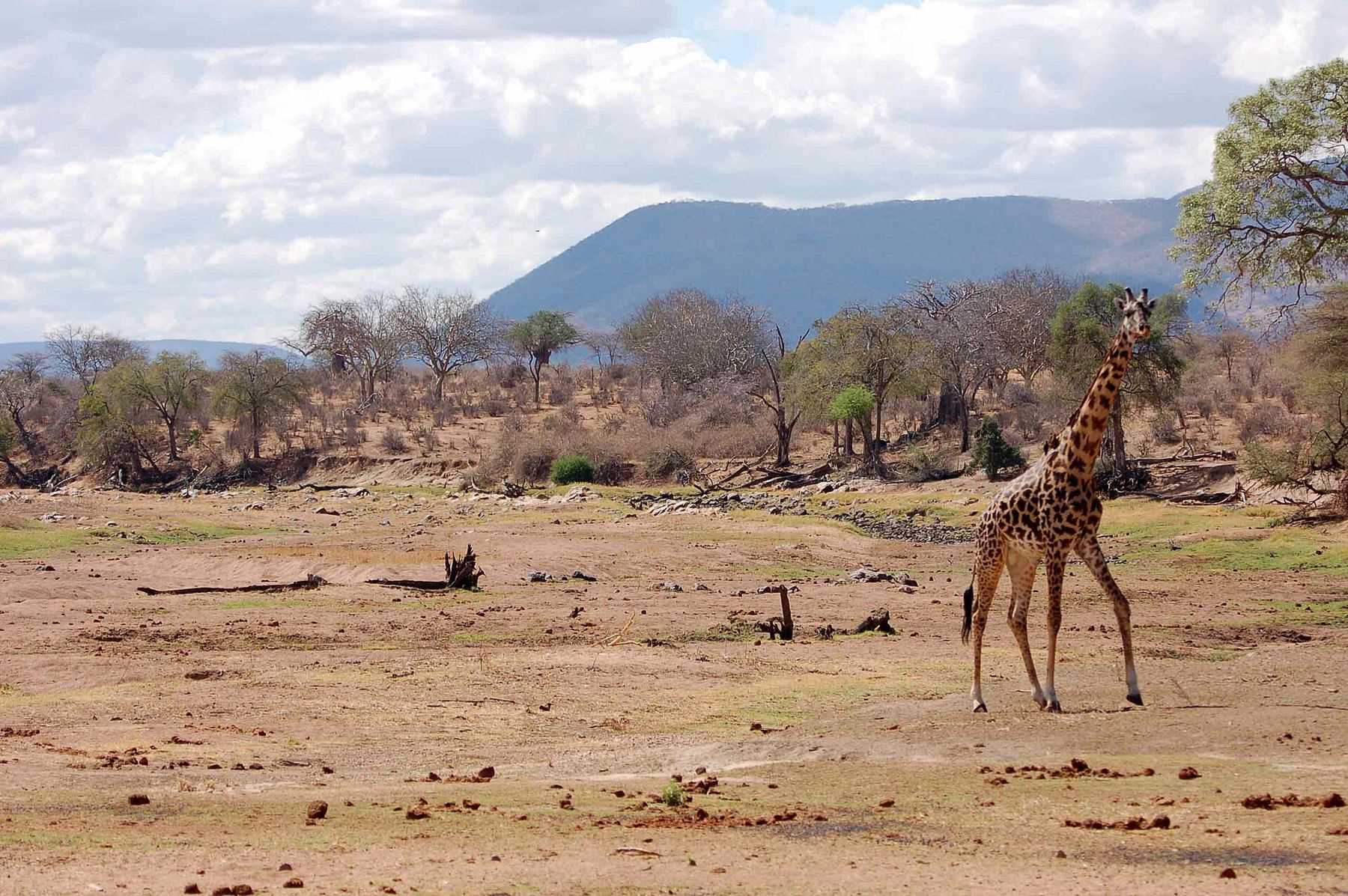
Through the hot months, the river acts as a magnet. Elephants come down in family groups, often in the middle of the day. Giraffe splay their legs to drink, impala and waterbuck move cautiously to the edge, and buffalo herds arrive in long lines. Predators know this too, and lions sometimes rest in the shade near the crossing points.
ALSO IN THIS GUIDERuaha's elephants, diggers of the dry countryWatching from a high bank gives you a clear view without disturbing anything. Stay in the vehicle unless a ranger says otherwise, keep a good distance from hippos, which are dangerous on land and in water, and never feed any animal.
The road along the river
The main park road follows the river near Msembe, where the park headquarters stands. This stretch is the most visited part of Ruaha, and for good reason: the mix of open banks, rocky sections and side channels gives you a chance of seeing a wide range of animals within a short drive. Sand rivers such as the Mwagusi join the main channel along here, and their beds make natural routes for wildlife.
Early morning and late afternoon bring the softest light and the most movement. In the middle of the day many animals rest in shade, though elephants often keep coming to the water.
A river under pressure
The Great Ruaha also feeds hydroelectric dams downstream and supports farming far beyond the park, so its flow matters to many people. Adding the Usangu wetlands to the park in 2008 was meant to protect the river's source, and work to restore its dry-season flow continues. When you see the river reduced to pools, you are seeing the result of choices made far upstream.
Plan to spend time at the water rather than passing it on the way somewhere else. A quiet hour parked above a busy pool shows you more of how the park works than a long drive.
Photographers and licences are listed on whose pictures these are.