A long bird list
More than 570 bird species have been recorded in Ruaha National Park. That number comes from the same mix that shapes the rest of the park: dry East African bush meets Southern African miombo woodland, and a large river and wide wetlands add a third set of birds. Binoculars are essential, even on a drive that is meant to be about big animals.
Two specialities
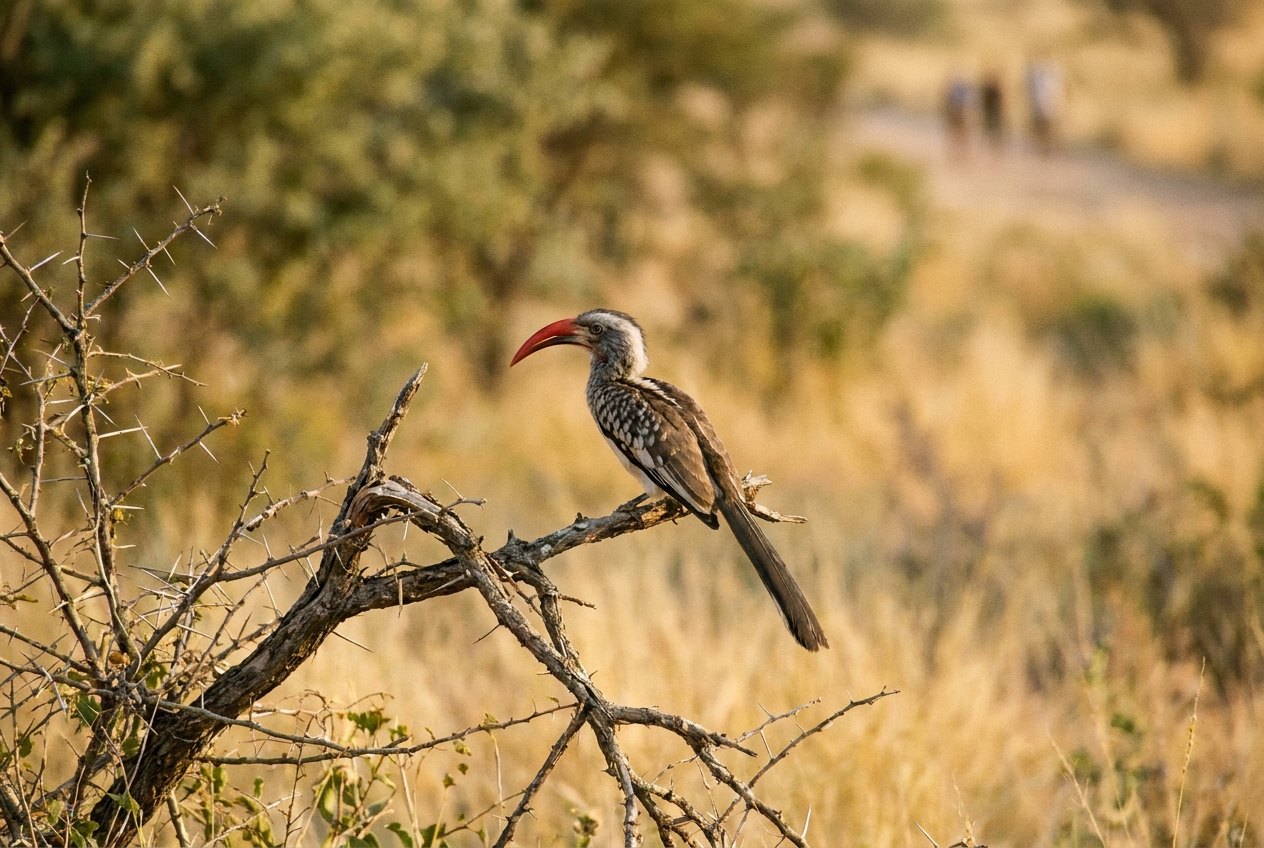
The Tanzanian red-billed hornbill is a bird found only in Tanzania, and Ruaha is one of the best places to see it. It is a slim hornbill with a curved red bill, often seen on the ground or flying low between trees in dry bush. It is a common bird here, but each sighting is of a species you will not find in most other countries.
The ashy starling is another bird of the region. Unlike the bright glossy starlings, it is plain grey-brown with a long tail, and it moves in small groups through acacia country. Its quiet colour makes it easy to pass by; it rewards a second look.
Hornbills are easy to enjoy even for beginners. Several species share the park, and they differ in bill colour, size and habits, so it is worth comparing them as you go. Some feed mostly on the ground, others in the treetops.
Other common birds include several more hornbill species, lilac-breasted rollers on exposed branches, guineafowl and francolins on the roads, and weavers whose nests hang from riverside trees.
ALSO IN THIS GUIDEThe Usangu plains and the Ihefu swampRaptors
Ruaha is good country for birds of prey. The bateleur, with its short tail and rocking, gliding flight, is a regular sight overhead. African fish eagles perch along the Great Ruaha and call with a loud, ringing cry. Vultures gather where there is a kill, and smaller hawks and falcons hunt across the open bush. Look for raptors on the tops of dead trees in the early part of the day, before they rise on the warm air.
Water and wetlands
Along the Great Ruaha River you find herons, storks, kingfishers, plovers and other waterbirds, especially where pools remain in the dry season. Further west, the Usangu wetlands hold large numbers of waterbirds, and wattled cranes have been recorded there. That area is remote and far less visited.
When to go for birds
From about November to April, migrants from Europe and Asia arrive and many resident birds breed, putting on bright plumage and calling loudly. This is the green season, when the bush is lush and some roads become harder. The dry months are good for birds too, with thin cover making them easier to see near water.
Birding is at its best in the first hours after dawn, when birds are calling and feeding before the heat builds. A slow drive with frequent stops, the engine off and the windows down, will show you far more than a fast one. Learn a few common calls and you will start to find birds by ear before you see them.
Wherever you watch, stay in the vehicle unless a ranger says otherwise, keep your distance from nests, and never feed any bird or animal.
Photographers and licences are listed on whose pictures these are.